How to Use Chopsticks: A Step-by-Step Guide for Beginners
A calm, practical guide to getting the grip right and eating with confidence.
Introduction
Chopsticks can feel impossibly awkward the first time - an exercise in making your own hand feel foreign to you. But they're genuinely one of those skills that clicks suddenly after a bit of practice, and once it does, you'll wonder what all the fuss was about. Here's exactly how to hold and use chopsticks correctly, broken down into simple steps that actually work.
What You'll Need
Just two chopsticks and something to practise with. If you don't have food handy, a bowl of grapes, large beans, or even small cubes of sponge work brilliantly for practice - they're forgiving enough to build confidence without the pressure of actual mealtime.
Avoid starting with rice. It's actually one of the harder things to pick up with chopsticks and will only frustrate you early on.
01. Position the First Chopstick (The Static One)
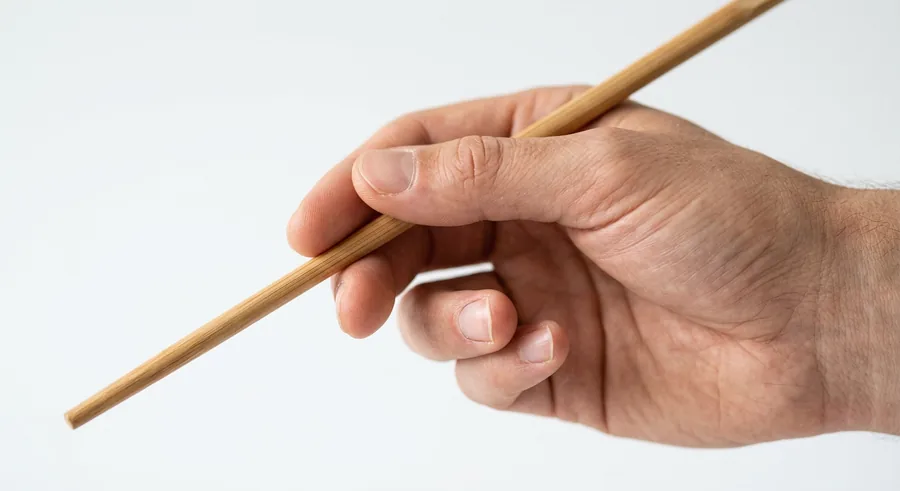
Pick up the first chopstick and rest it in the crook of your hand - the fleshy web of skin between your thumb and index finger. Let it settle into place so it rests against the base of your thumb and is supported by the tip of your ring finger underneath.
- Against the base of your thumb
- Supported by the tip of your ring finger underneath
This chopstick doesn't move. It's the anchor. Think of it as the bottom jaw - it stays completely still throughout. The key mistake at this stage: gripping it too tightly. It should feel resting, not clenched.
02. Position the Second Chopstick (The Moving One)
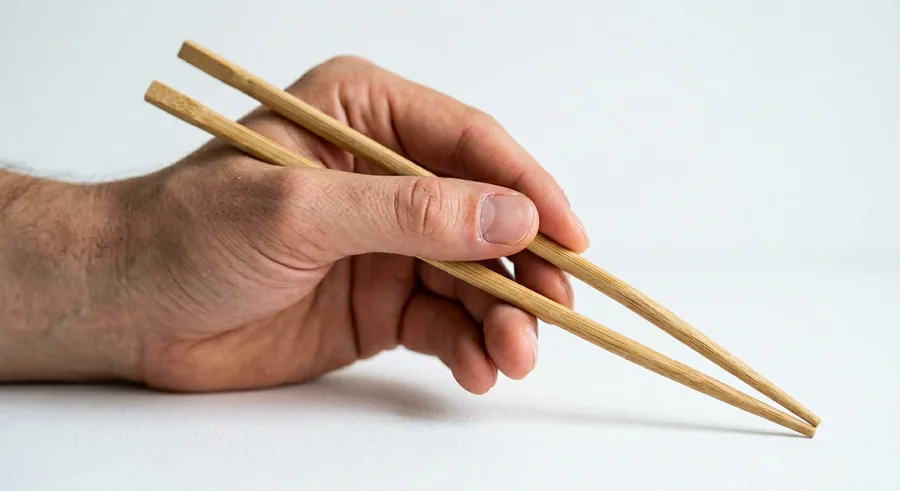
Pick up the second chopstick and hold it exactly as you would a pencil - between the tip of your index finger, the tip of your middle finger, and the side of your thumb, about a third of the way down from the top.
The two chopsticks should now be roughly parallel, with their tips aligned and pointing in the same direction.
If the tips are at very different heights, slide one chopstick up or down until they meet. Aligned tips are the foundation of being able to actually pick anything up.
03. The Pivot Motion
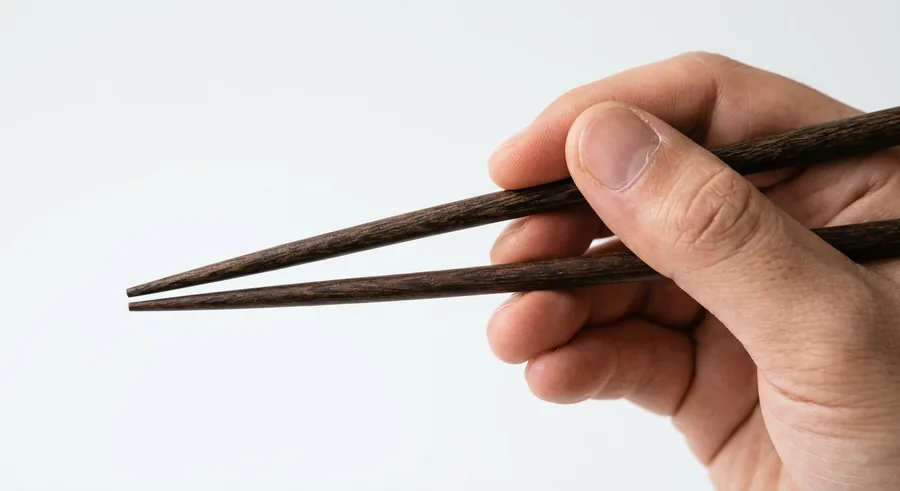
Now move only the top chopstick. Pivot it down toward the bottom one by curling your index and middle fingers, and open it back up by straightening them. Your thumb acts as the pivot point.
The bottom chopstick stays completely still. If it's moving, your grip on it is too loose - re-anchor it against your ring finger.
Practise this open-and-close motion without any food a few times until it feels natural. The motion should feel like a gentle pinch, not a squeeze.
04. Pick Something Up
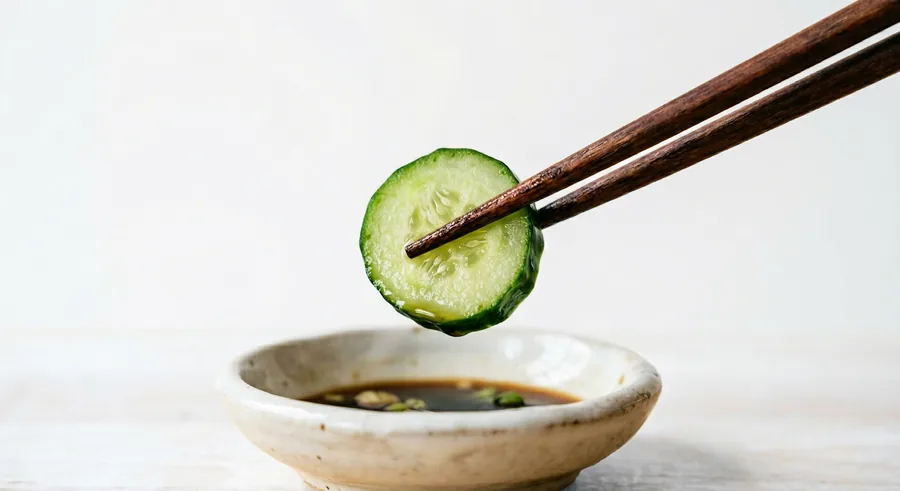
Start with something relatively large and not slippery - a grape, a chunk of carrot, a piece of tofu, or a dumpling. Open the chopstick tips, position them either side of your target, and close them together with a firm but controlled pinch.
The pinch point should be about 1-2 cm from the tips - not right at the very end (not enough control) and not too far back (not enough precision).
Lift slowly and confidently. Hesitation is the enemy - a half-committed lift is more likely to drop food than a decisive one.
05. Eating Rice (Once You're Ready)
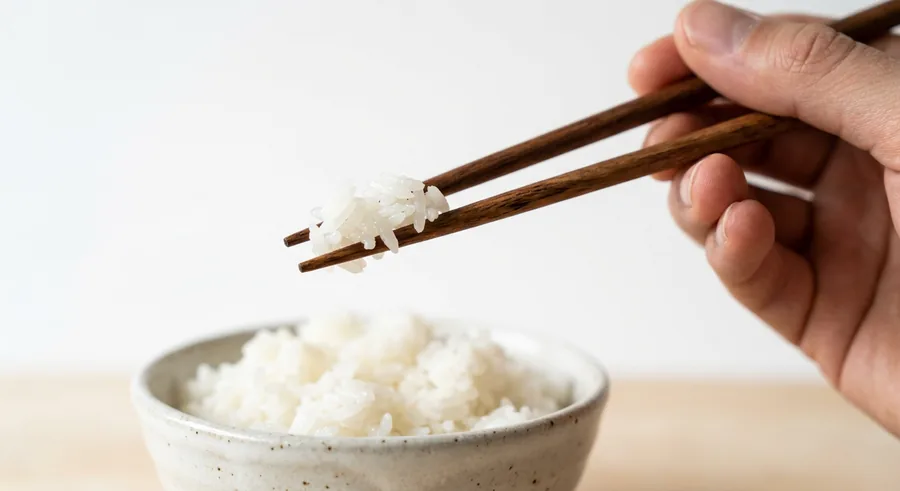
Rice is the advanced level. Sticky short-grain Japanese or Korean rice is the easiest to start with - it clumps together and behaves like a small solid. Long-grain and jasmine rice is harder as individual grains love to escape.
The technique that actually works: bring the bowl close to your mouth and use the chopsticks to guide and push the rice in rather than lifting every grain individually. This is how it's done across East Asia and it's not considered bad manners - it's standard practice.
Common Mistakes to Avoid
- Crossing the chopsticks - If the sticks cross over each other in an X shape you won't be able to open and close them properly. Keep them parallel at all times.
- Moving both chopsticks - Only the top one moves. If you find yourself moving both, stop, re-seat the bottom one in the ring finger groove, and try again.
- Holding too far down - Gripping near the tips gives you no leverage. Hold roughly two thirds of the way up the chopstick for the best balance of control and reach.
- Starting with the wrong food - Noodles, large pieces of meat, and dumplings are actually easier than rice. Start there and work your way to the fiddly stuff.
- Tensing up - A white-knuckle grip is the most common beginner mistake. The chopsticks need a relaxed, confident hold to work properly. If your hand is aching after a few minutes, you're gripping too hard.
A Note on Chopstick Etiquette
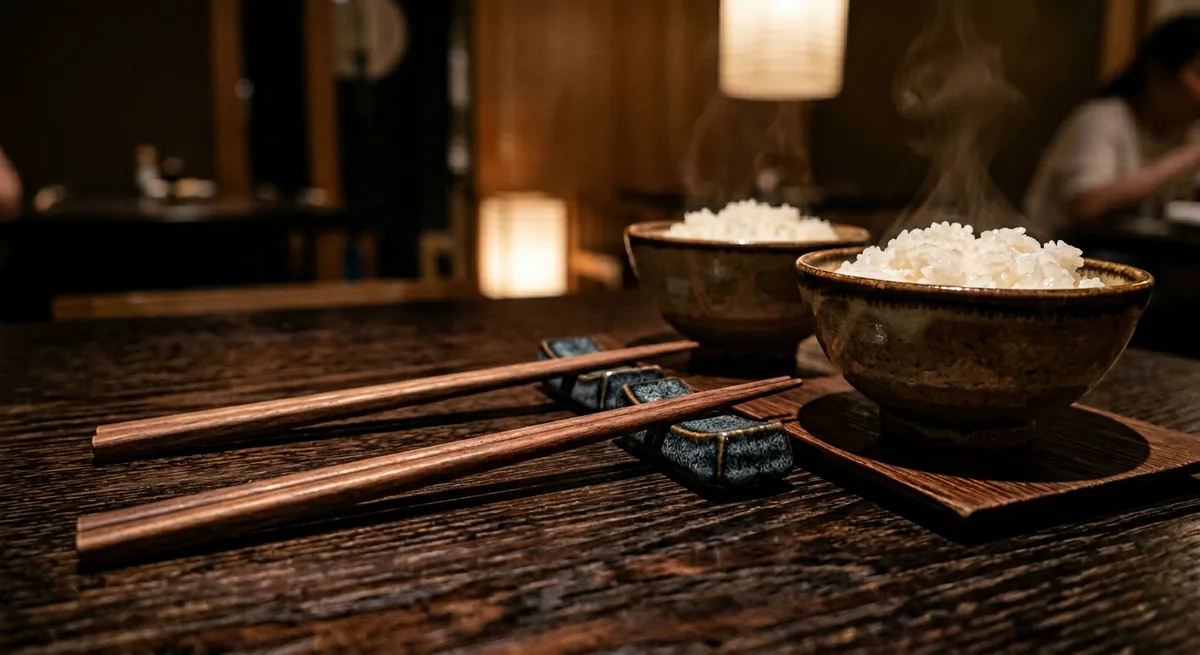
- Never stick chopsticks upright into a bowl of rice - this resembles incense at a funeral and is considered very bad luck across much of East Asia.
- Don't pass food from chopstick to chopstick - this also mirrors a funeral rite and should be avoided.
- Rest chopsticks across your bowl or on a chopstick rest, not pointing at other diners.
- With communal dishes, use the opposite (serving) end of your chopsticks, or dedicated serving chopsticks, to take food from shared plates.
How Long Does It Take to Learn?
Genuinely, most people get to functional with 20-30 minutes of deliberate practice. You won't be elegant, but you'll be able to eat. A few sessions of using them instead of a fork at home and it starts to feel natural. A few weeks of regular use and you won't think about it at all.
The trick is using them at home when the stakes are low, rather than only attempting it at restaurants when you're hungry and self-conscious.
Now you know how to use one - discover the other 101 things you can do with a chopstick