Craft & DIY
#18 · Apply glue precisely
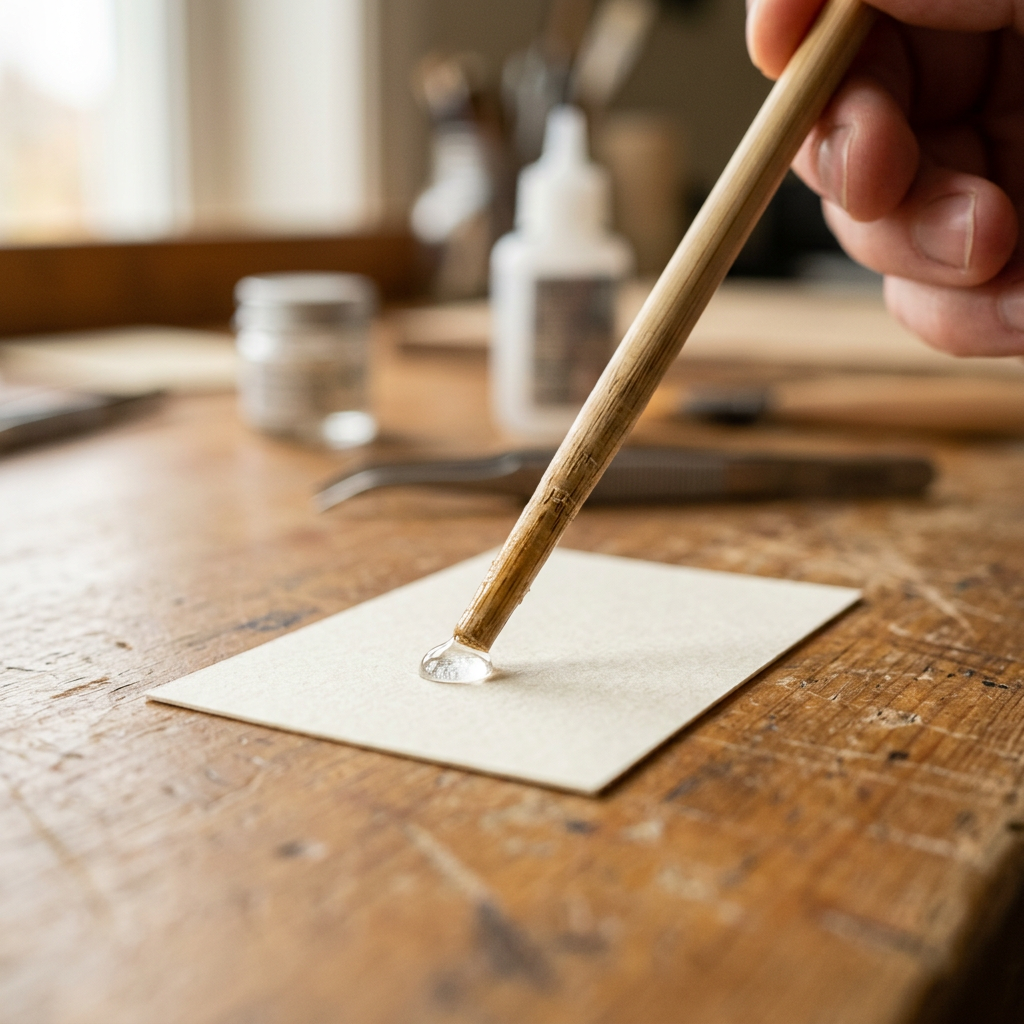
Dip the tip into PVA, superglue, or wood glue to apply exactly where you need it - far more accurate than squeezing from the bottle.
The nozzle on a PVA bottle is designed for enthusiasm. For model kits, jewellery repairs, card-making and anything where a millimetre of misplaced glue ruins the piece, you want to take glue off the bottle and put it exactly where you mean to. A chopstick tip is the applicator.
How to do it
- Squeeze a small puddle of glue onto a scrap of foil, an old lid or a piece of baking paper - never work straight from the bottle.
- Dip only the last few millimetres of the chopstick tip in.
- Touch it to the work rather than dragging, and let surface tension pull the glue off the wood.
- For a thin even film rather than a dot, snap the chopstick and use the flat wedge the break leaves.
- Wipe the tip on a rag between applications, before the glue starts to skin.
Why it works
How much glue a tool picks up is governed by the surface area you dip and how well the glue wets it. A chopstick tip is small and only mildly absorbent, so it carries a droplet big enough to bond and too small to run - which is precisely the window that a squeeze bottle cannot hit.
If it isn't working
- Glue strings and cobwebs everywhere: it has started to cure on the stick. Use a fresh one.
- The dot spreads further than you wanted: you dipped too deep. Only the very tip should be wet.
- Nothing transfers at all: the glue is too thick or has skinned over. Stir the puddle and try again.
Tips & warnings
- Fresh chopstick for every superglue job. Cured cyanoacrylate on the tip will drag lumps into the next repair.
- For gluing spectacle frames or a snapped model part, a chopstick and a puddle is genuinely the professional method, not a compromise.
- Keep a few snapped halves in the craft drawer - the wedge end is more useful than the point for most jobs.