Kitchen & Food
#5 · Cake tester
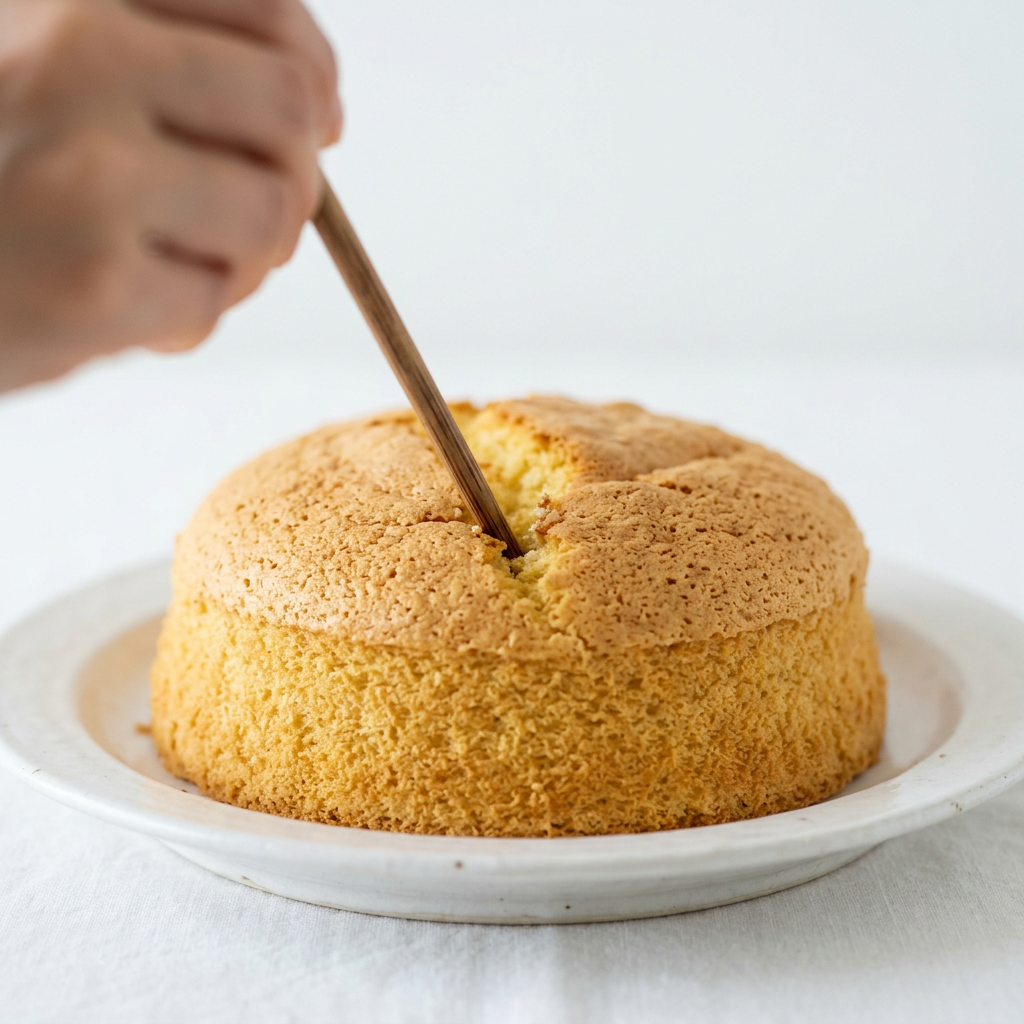
Poke into the centre of a baking cake - if it comes out clean, it's done. A classic baker's trick with zero washing up.
A cake tester in a kitchen shop is a slim steel spike with a loop on the end, and it costs about £6. A wooden chopstick is the same shape, does the same job slightly better, and is already in your drawer. Bakers have been quietly using them for decades, and if you have ever watched a professional pastry kitchen you have probably seen one go into a sponge.
The reason a chopstick beats the shop-bought version is texture. Steel is smooth, so wet batter slides off it on the way out and a nearly-raw cake can read as done. Bare bamboo is slightly porous and has a visible grain, so batter clings to it and you get an honest answer. This is also why the classic alternative is a wooden cocktail stick rather than a knife.
How to do it
- Start testing about five minutes before the recipe says the cake should be done. Ovens lie, and an over-baked sponge cannot be rescued.
- Open the door, pull the shelf out, and work quickly - a long door-open at this stage can collapse a delicate sponge.
- Push the chopstick straight down into the thickest part, usually the centre, all the way to the base of the tin.
- Pull it out in one smooth motion and look at the whole length, not just the tip.
- Read it: completely clean or a few dry crumbs means done. Wet batter, or a shiny wet streak, means it needs longer.
- If it needs longer, give it three to five minutes and test in a slightly different spot - the old hole will read wet whatever you do.
Why it works
A cake bakes from the outside in, so the centre is always the last part to set. Pushing a probe to the base of the tin samples the coldest, wettest point in the whole cake. Bamboo's porous grain holds onto uncooked batter long enough for you to see it, and it's stiff enough not to flex on the way through a dense sponge.
If it isn't working
- Clean stick but the cake sinks as it cools: it was underdone in the middle despite the reading. Test dead centre and right to the base next time.
- Stick comes out with wet crumbs that aren't batter: that's usually fine, especially in a chocolate or carrot cake. Look for raw shine, not moisture.
- Stick drags and tears the crumb on the way out: the cake is not set yet. Give it more time.
- You keep getting different answers: you're probably hitting a pocket of melted chocolate or a piece of fruit. Try a second spot.
Tips & warnings
- Use the blunt end. The pointed end makes a narrow hole that closes up and tells you less.
- Wipe the chopstick between tests so old batter doesn't confuse the reading.
- Use a fresh chopstick for each cake. Dragging raw batter from one bake into another is a real way to end up with a gummy streak.
- For deep loaf cakes and bundts, a chopstick's length is a genuine advantage over a short tester.
Common questions
Does this work for brownies?
Not in the same way. Brownies are meant to be underbaked in the middle, so a clean chopstick means you have gone too far. Look for moist crumbs clinging to it rather than a clean stick.
What about cheesecake?
Don't. Cheesecake is judged by jiggle - the outside set with a wobble in the centre two inches across. Poking it makes a crack that will widen as it cools.
Can I use a lacquered or painted chopstick?
Better not to. Lacquer is smooth so batter slides off it, and you don't want a finish that isn't rated for food contact going into a hot cake. Plain bamboo takeaway chopsticks are ideal.