Art & Music
#55 · Drumsticks
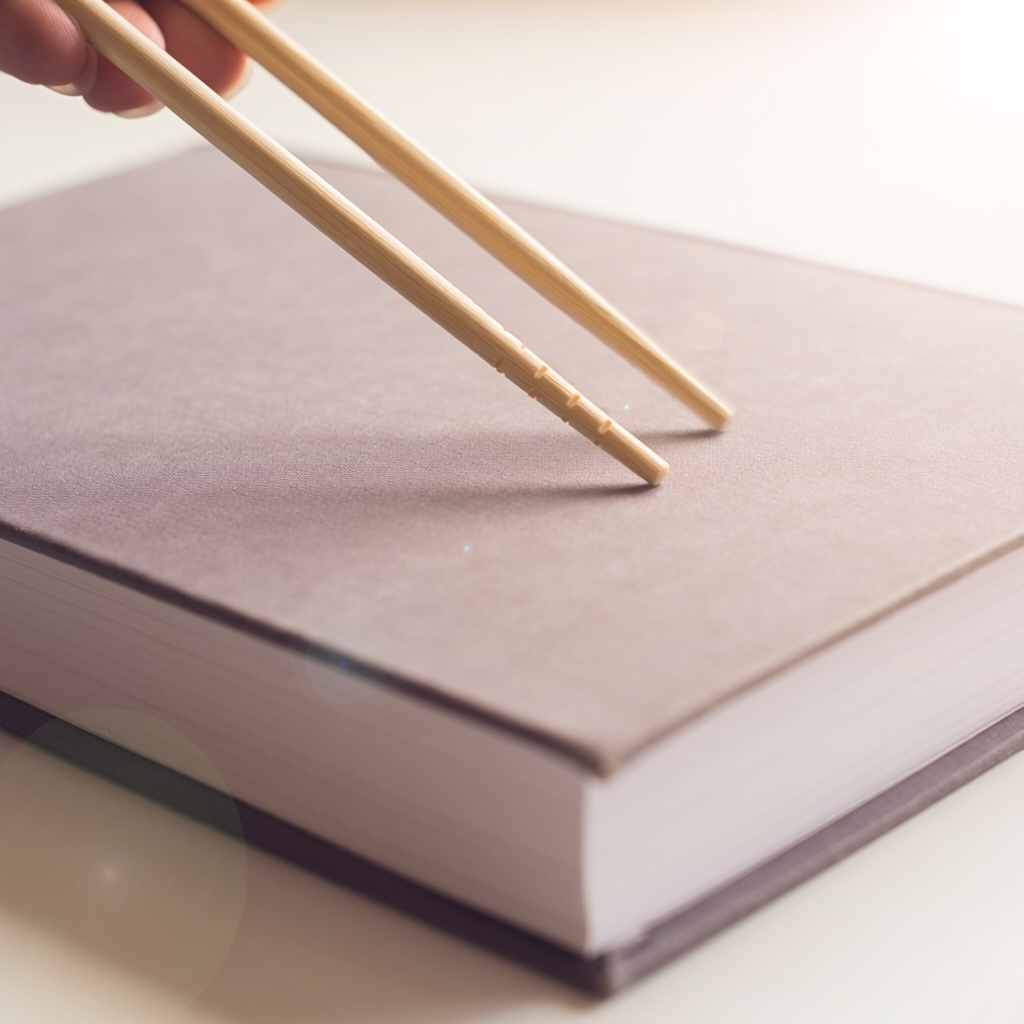
Two chopsticks, a stack of hardback books, and enough conviction. Neighbours may have opinions.
Every child has drummed on a saucepan with a wooden spoon. A pair of chopsticks is the same instinct with better tools - close enough to real drumstick weight to practise rudiments on a cushion or a practice pad.
How to do it
- Pick two identical chopsticks. Mismatched weights will teach you an uneven stroke.
- Hold each about a third of the way from the blunt end, between thumb and first finger, with the other fingers resting rather than gripping.
- Let the stick rebound off the surface rather than driving it down and stopping it.
- Practise single strokes slowly and evenly before anything faster.
Why it works
The fulcrum grip works because a drumstick is a lever pivoting in a loose hand, and the rebound does half the work for you. Squeeze and you kill the bounce, which is why beginners' hands ache and their strokes sound flat. Bamboo is stiff and light enough to rebound convincingly.
Tips & warnings
- A folded towel or a proper practice pad, never an actual drum head - a chopstick's small hard tip can dent a skin.
- Tape around the tips for a quieter, mellower sound.
- A pair of 5A sticks costs about £6 and is a better tool the moment you are sure you want to keep going.