Kitchen & Food
#1 · Eating (duh)
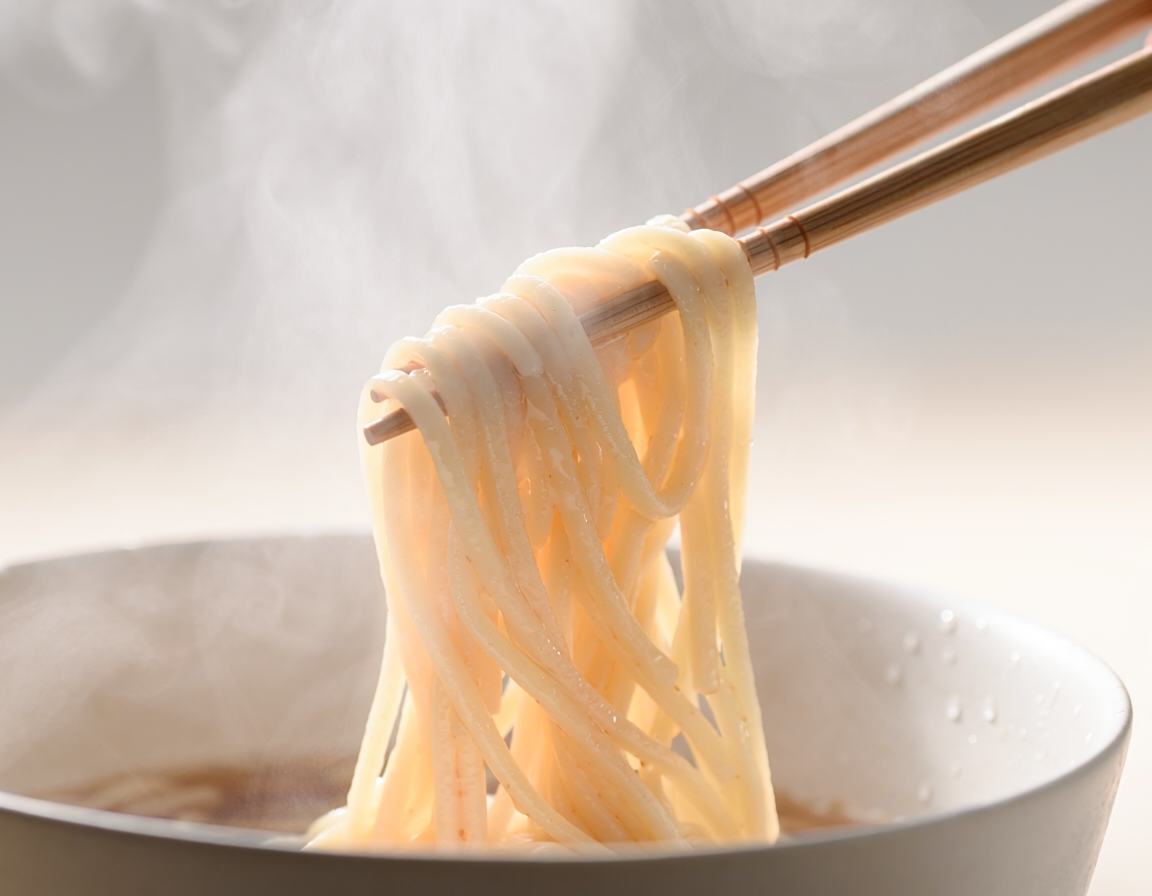
The original, the classic, the one that started it all. If chopsticks had just one purpose, this would be it - everything else on this list is a bonus.
It feels almost cheeky to include this on a list of alternative uses, but it would be strange to write about chopsticks for 101 entries and skip the thing they were designed for. Long before it became a plant stake or a cake tester, the chopstick was a pair of sticks for lifting food, and it is still the most elegant tool ever built for the job.
Most people who say they 'can't use chopsticks' are making one of two mistakes: they move both sticks, or they grip so hard their hand cramps. Neither is a coordination problem. The bottom chopstick never moves at all - it just sits in your hand - and the whole technique is a gentle pinch rather than a squeeze. Once those two things click, the rest takes about twenty minutes.
How to do it
- Rest the first chopstick in the web between your thumb and index finger, with the far end supported on the tip of your ring finger. This one is the anchor and does not move again.
- Pick up the second chopstick and hold it exactly like a pencil - resting on your middle finger, controlled by index finger and thumb.
- Check the tips are level with each other. If one sticks out past the other, slide it back. Uneven tips are the single most common reason people can't pick anything up.
- Open and close the top chopstick by curling and straightening your index and middle fingers. Watch the bottom one: if it is moving too, you are gripping it rather than resting it.
- Grip the chopsticks about two thirds of the way up, and pinch food roughly 1-2cm from the tips. Too close to the tips and you have no control; too far back and you lose precision.
- Start with something large and forgiving - a dumpling, a chunk of broccoli, a piece of tofu. Rice is the hardest thing on the table, not the easiest.
Why it works
The two sticks form a third-class lever: the pivot is at your thumb, the effort comes from your fingers in the middle, and the load is out at the tip. That arrangement trades force for distance and control, which is why a small, precise movement of two fingers becomes a firm and very accurate pinch 20cm away.
If it isn't working
- Food keeps slipping out: your tips are probably crossing. Hold them up and look - they should meet flat against each other, not scissor past.
- Your hand aches after five minutes: you are gripping far too tightly. The sticks should feel balanced in the hand, not clamped.
- The bottom chopstick keeps sliding down: it isn't seated deep enough in the web of your thumb. Push it further back.
- You can hold things but not lift them: try pinching a little further from the tips, where you have more grip.
Tips & warnings
- Plain wooden chopsticks are far easier to learn on than lacquered or melamine ones. The slight roughness grips food.
- Bringing the bowl close to your mouth is correct, not rude. Small bowls exist precisely so they can be lifted.
- Never stand chopsticks upright in a bowl of rice. It mirrors incense burned for the dead at funerals and reads as genuinely upsetting in Japanese and Chinese homes.
- Don't pass food chopstick-to-chopstick either, for the same reason.
Common questions
How long does it take to learn?
Most people can feed themselves after twenty or thirty minutes of deliberate practice, and stop thinking about it after a couple of weeks of regular use. Practise at home with low stakes rather than at a restaurant when you're hungry.
Is it really acceptable to bring the bowl to your mouth?
In China, Japan and Korea, yes for rice bowls - though in Korea rice is more often eaten with a spoon, and lifting bowls of soup is less common. It is not a shortcut, it is the intended method.
Are training chopsticks worth it?
For young children, yes. For adults they tend to teach a grip you then have to unlearn, because they hold the pivot for you. You are usually better off with a plain pair and ten minutes of patience.