Gardening
#33 · Emergency plant stem stake
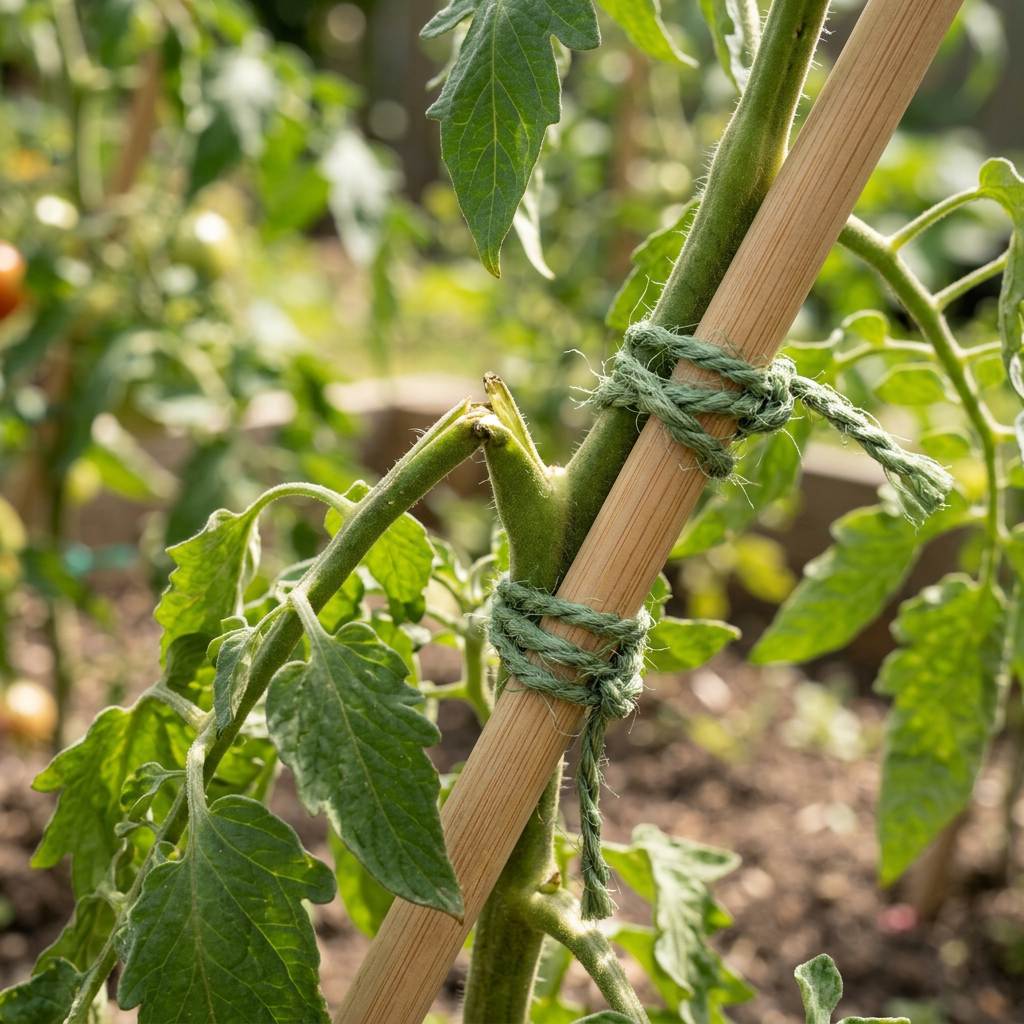
Tie a broken plant stem to a chopstick splint with twine or a twist tie. Many a tomato plant has been saved this way.
A tomato truss snapped by wind, a pepper plant caught by a door, a houseplant knocked off a windowsill. If the stem is broken but not fully severed, splinting it in the next few minutes gives it a genuine chance of knitting back together, and a chopstick is the right size of splint.
Whether this works comes down to one thing: is there still a strip of intact tissue joining the two halves? Plants move water up through xylem and sugars down through phloem, both of which sit just under the skin of the stem. If any of that connection survives, the plant can bridge the gap. If the break is clean through, it cannot, and no amount of taping will change that.
How to do it
- Work quickly. A break that has been dry for an hour is much less likely to take.
- Bring the two halves gently back into their original alignment. Don't force anything that resists.
- Lay the chopstick along the stem so it spans well past the break in both directions.
- Bind with soft plant tape, a strip of cloth, or electrical tape - firmly enough to stop movement, loosely enough that the stem can still expand.
- For an important plant, add a second chopstick on the opposite side. Two-sided splints hold alignment far better.
- Support the whole plant so wind or its own weight isn't pulling on the join, and keep it well watered but out of harsh sun for a fortnight.
- Check at three to four weeks. If it has fused, remove the tape - left on, it will strangle the stem as it thickens.
Why it works
The repair is the same one a plant makes for any wound: cells at the edges divide and form callus tissue that bridges the gap, then reconnects the vascular strands. All the splint does is hold the two faces still and in contact long enough for that to happen, which is precisely what a bone splint does too.
If it isn't working
- It wilts above the break for a day or two then recovers: normal. The connection is working.
- It wilts and doesn't recover: the vascular tissue is severed. Take a cutting from the broken piece instead - a snapped tomato shoot roots very easily in water.
- The join blackens or goes soft: infection has got in. Cut back cleanly below it.
Tips & warnings
- Works best on soft, actively growing stems. Woody old growth rarely reunites.
- Tomatoes are remarkably good at this. Peppers and aubergines are less reliable.
- If the break is complete, don't bin the top - most soft-stemmed plants root from a cutting within a fortnight.