Emergency Uses
#74 · Finger splint
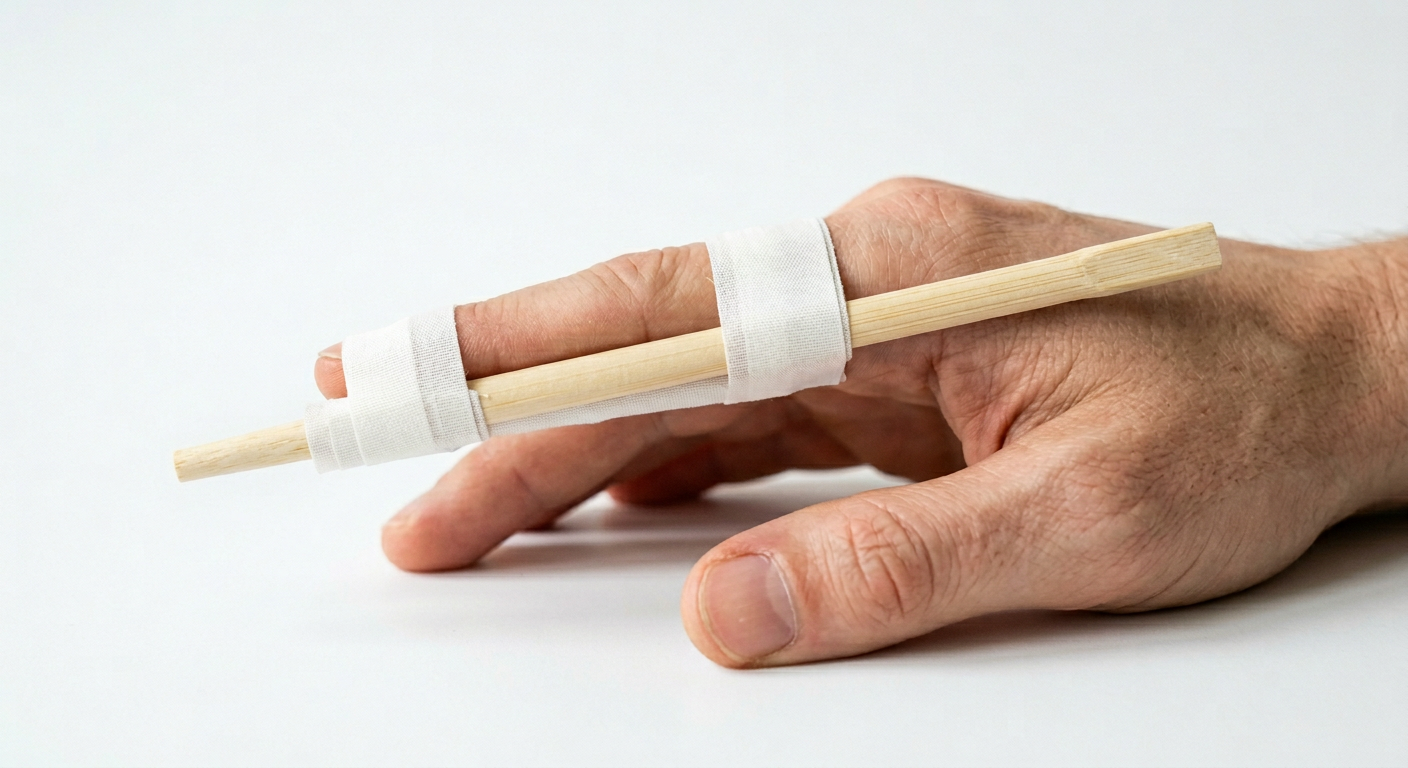
Tape a chopstick alongside a bent or sprained finger to immobilise it. Proper first-aid use - and it actually works.
A broken or badly sprained finger wants to be held still while you get to A&E, and a chopstick taped alongside it does that job. Buddy strapping to the neighbouring finger is usually better if you have tape, but a rigid splint is the more stable option for a finger that is obviously deformed or won't bend.
How to do it
- Leave the finger in whatever position it is resting in. Do not pull or straighten it.
- Lay the chopstick along the palm side of the finger, running past the joints above and below the injury.
- Tape loosely above and below the injury - never directly over the break, and never over a knuckle joint.
- Check the fingertip: it should stay pink and warm. If it goes pale, blue or numb, the tape is too tight. Loosen it immediately.
- Get it looked at properly the same day.
Why it works
Immobilising the joints either side of an injury stops the bone ends moving against each other. That reduces pain, limits further soft-tissue damage, and is the same principle behind every splint from a finger to a femur.
Tips & warnings
- Pad the chopstick with a folded tissue or a bit of cloth - bare wood against a swollen finger is miserable.
- For a thumb, a chopstick either side gives far better stability than one underneath.
- Ice and elevation do more for swelling than the splint does.