Kitchen & Food
#12 · Flip a crepe (bravely)
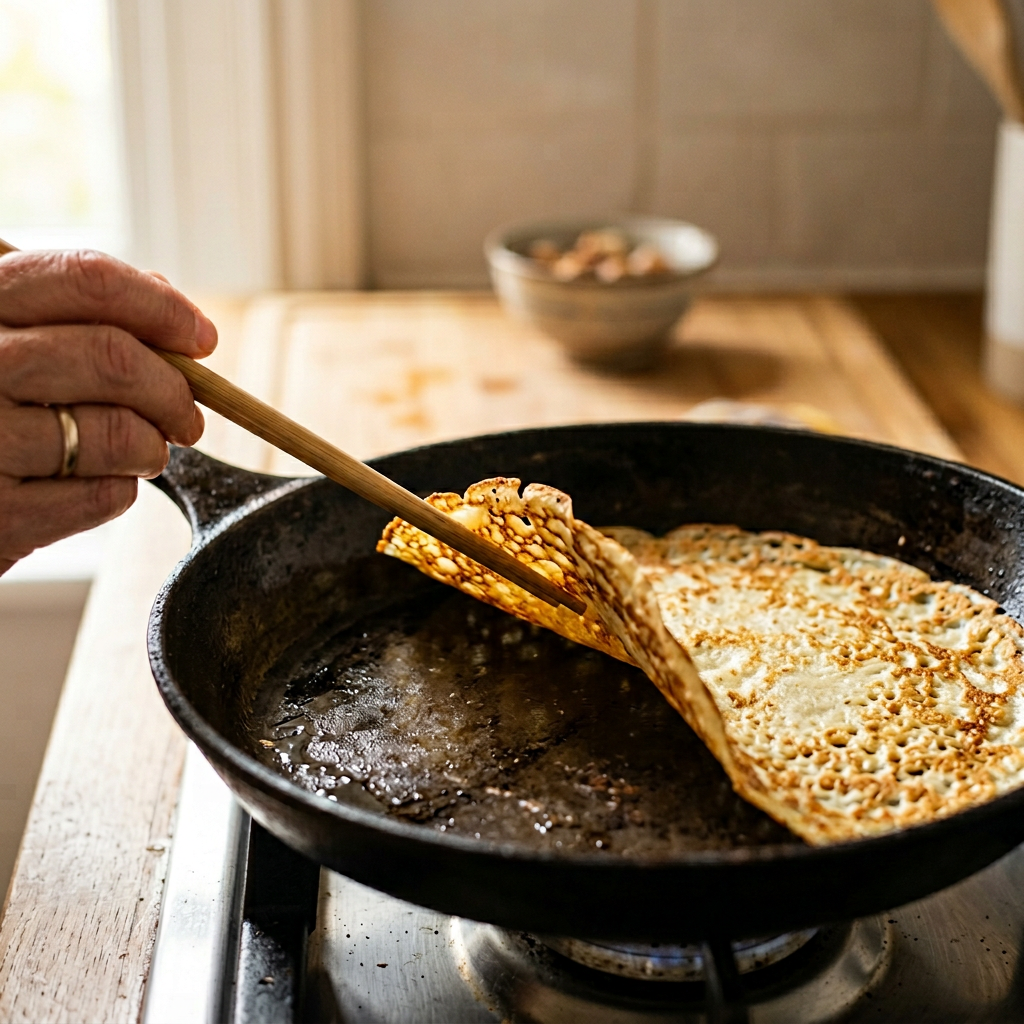
Slide a chopstick under the edge of a crepe and flip it with conviction. If it tears, that was always the plan.
A crepe is thin, wide and fragile, and a normal spatula is a blunt instrument against it - the leading edge tends to bunch the batter rather than slide beneath it. A chopstick presents almost no thickness at all, which is exactly what you want at the moment of separation.
How to do it
- Wait until the edges lift away from the pan by themselves, usually 30 to 60 seconds. Trying to move it before this point is the single biggest cause of torn crepes.
- Run the chopstick around the rim to free the whole edge.
- Slide it flat underneath, working towards the middle, keeping it parallel to the pan.
- Lift the near edge, get your fingers on it, and turn it over in one confident motion.
- Give the second side 20 or 30 seconds - it always needs less than the first.
Why it works
A crepe releases when the water at the batter-pan interface has boiled off and the proteins have set. Before that it is glued down and nothing will move it cleanly. After it, only a very small amount of force is needed - which is why a thin edge works and a thick one tears.
If it isn't working
- It tears every time: you are going too early. Wait for the edges to curl.
- It sticks in the middle but not the edges: the pan is not evenly heated. Give it longer to come up to temperature before the first crepe.
- The first one is always a disaster: it is, for everyone. The pan is seasoning itself. Eat it standing up and move on.
Tips & warnings
- Unlacquered wood only. A hot pan will soften a lacquered finish.
- For a large crepe, two chopsticks used together give you far more support.
- A genuinely non-stick pan is doing most of the work in this entry.