Kids & Play
#62 · Frame a tiny kite
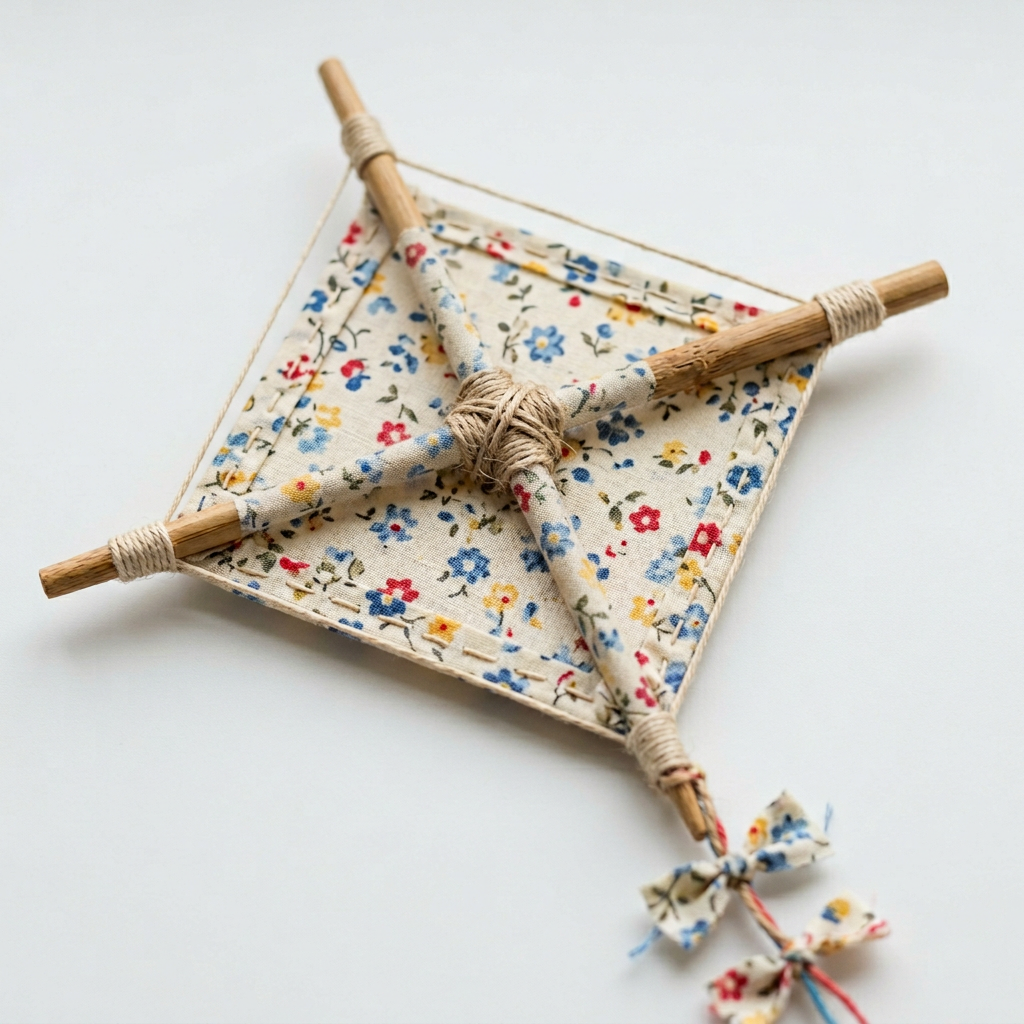
Cross two chopsticks and tie the joint firmly - you've got a kite frame. Add a plastic bag and some string. Aerodynamics: variable.
The classic diamond kite is two crossed sticks, a sheet of something light, a bridle and a tail. Built at chopstick scale it makes a kite that flies genuinely well on a light breeze, which is the right amount of wind for a child anyway.
How to do it
- Cross two chopsticks in a T rather than an X - the horizontal spar sits about a third of the way down the vertical one.
- Lash the crossing point tightly with thread and add a drop of glue.
- Run a loop of thread around all four tips to make the outline, notching each tip so it cannot slip off.
- Cut a diamond of tissue paper or a plastic bag about 1cm larger than the outline, and fold the margin over the thread and glue it down.
- Tie a bridle: run a length of thread from the top of the vertical chopstick to the bottom of it, leaving it slightly slack.
- Tie the flying line to the bridle about a third of the way down, and add a paper tail two or three times the kite's length.
Why it works
A kite flies because the bridle holds it at an angle to the airflow, so the wind pushing on the sail is deflected downwards and the reaction pushes the kite up and back. The tail is not decoration - it adds drag well behind the centre of pressure, which is what stops the kite rotating and diving. A diamond kite without a tail will spin into the ground almost immediately.
If it isn't working
- It spins and dives: the tail is too short. Double it.
- It sits flat and won't climb: the bridle attachment is too low. Move it up a little.
- It darts hard to one side: the frame is asymmetric, or one side of the sail is tighter. Check the spar is centred.