Around the House
#46 · Guide cables through tight gaps
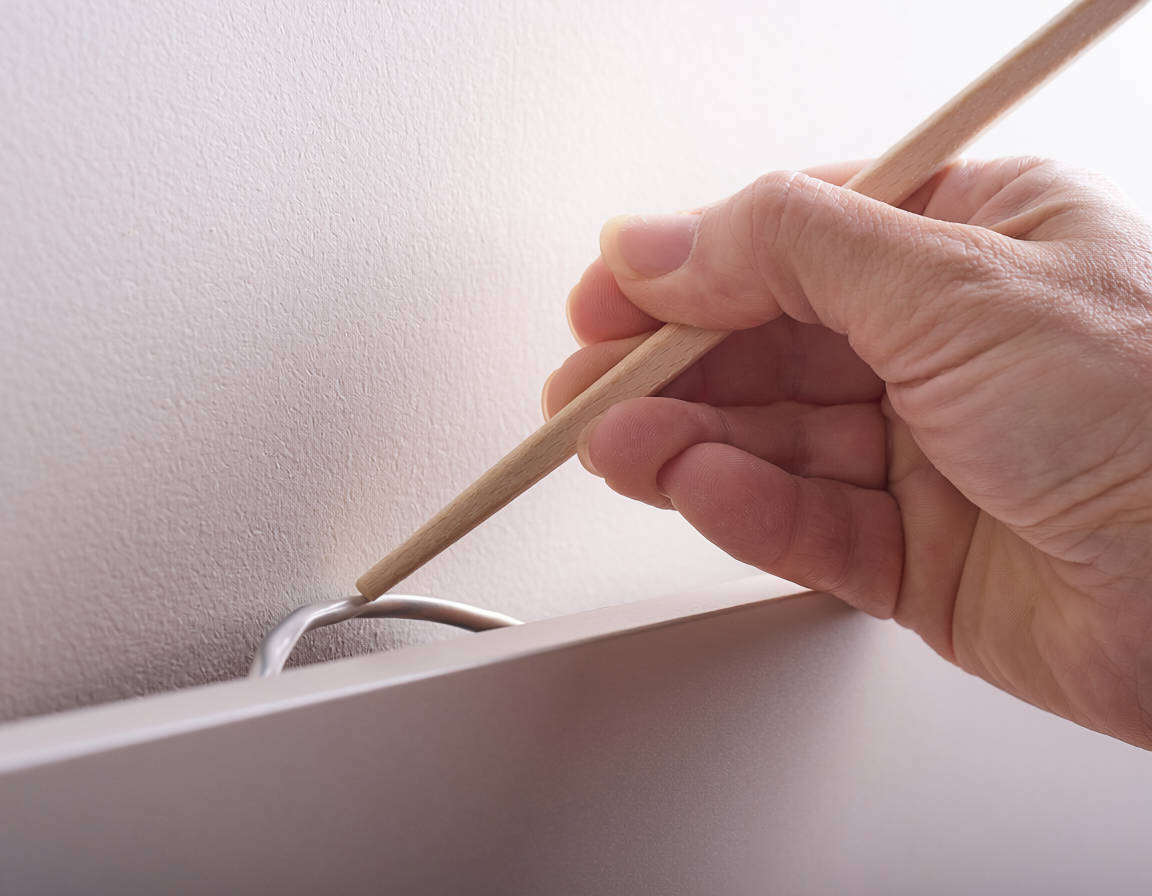
Thread a wire or cable through a narrow gap in a wall or piece of furniture using a chopstick as a guide rod.
Feeding a cable behind a skirting board, through a desk grommet or down the back of a cabinet is a two-handed job that needs three hands. Taping the cable to a chopstick and pushing that through first turns it into a one-handed job.
How to do it
- Tape the cable end to the tip of the chopstick, wrapping the tape right around both rather than sticking it on top.
- Taper the tape so the join is smooth - a stepped edge is what catches on the far side of a grommet.
- Push the chopstick through the gap first, leading with the bare end.
- Pull it out the far side, drawing the cable behind it.
- Untape and dress the cable properly.
Why it works
A cable is a tension member: it will pull perfectly well but it cannot push, because it buckles as soon as you apply any compressive load. A chopstick can carry compression along its length, so it converts a push into forward motion. This is the whole reason cable rods exist, and a chopstick is the same idea over a much shorter distance.
If it isn't working
- The tape peels off inside the gap: not enough of it, or the cable was dusty. Wipe and use more.
- It jams halfway: something is catching on the tape join. Pull back, re-tape it smoother, and try again.
- It won't turn a corner: rigid rods can't. Fish from both ends towards the corner instead.
Tips & warnings
- Two chopsticks taped end to end doubles the reach, at the cost of some stiffness.
- For long runs through walls, proper fibreglass cable rods cost about £15 and are the right tool.
- Never push anything into a wall cavity without knowing what is in it. Cables and pipes are exactly where you would want to fish.