Gardening
#34 · Label garden rows
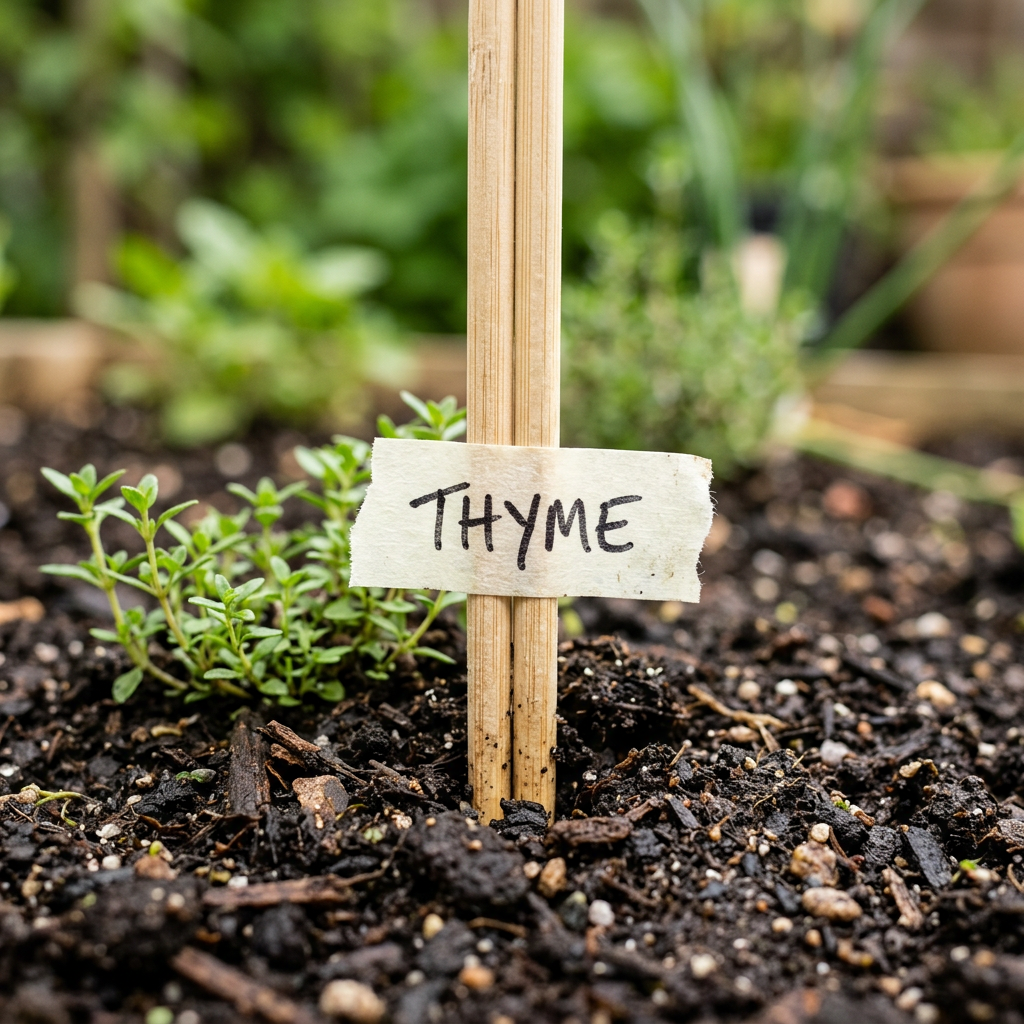
Write the plant name on masking tape, wrap it around the end of a chopstick, and press it into the soil. Job done.
Plastic plant labels go brittle in UV, snap, and spend the next few centuries as small white shards in your soil. A chopstick with the crop name on it does the same job, costs nothing, and can go on the compost heap at the end of the season.
How to do it
- Write on the flattest face of the chopstick - the blunt end usually has one.
- Use a graphite pencil rather than marker. This is the one detail that matters, and it is the opposite of what most people assume.
- Add the variety and the sowing date. In March you will be certain you'll remember; in June you will not.
- Push it in at the start of the row, or against the rim of the pot.
- Pull them up at the end of the season and compost them.
Why it works
Pencil is graphite - essentially carbon dust pressed into the wood fibres. It has no dye to fade and is not water soluble, so it survives a season outdoors comfortably. Permanent marker is dye-based, and the same UV that embrittles plastic labels bleaches the dye out, usually within about two months.
Tips & warnings
- Char the buried end briefly with a lighter if you want it to last longer. Charring is a genuine, very old wood preservation method.
- Colour-code with a wrap of tape at the top - one colour for herbs, one for salad, one for roots.
- Write on both faces. One will always end up pointing away from the path.
Common questions
How long will one actually last outdoors?
A full growing season, reliably. Two if the soil is well drained and you charred the end. They are not a permanent label for a perennial - use slate or metal for anything you need to read in three years.