Kitchen & Food
#3 · Marshmallow roasting stick
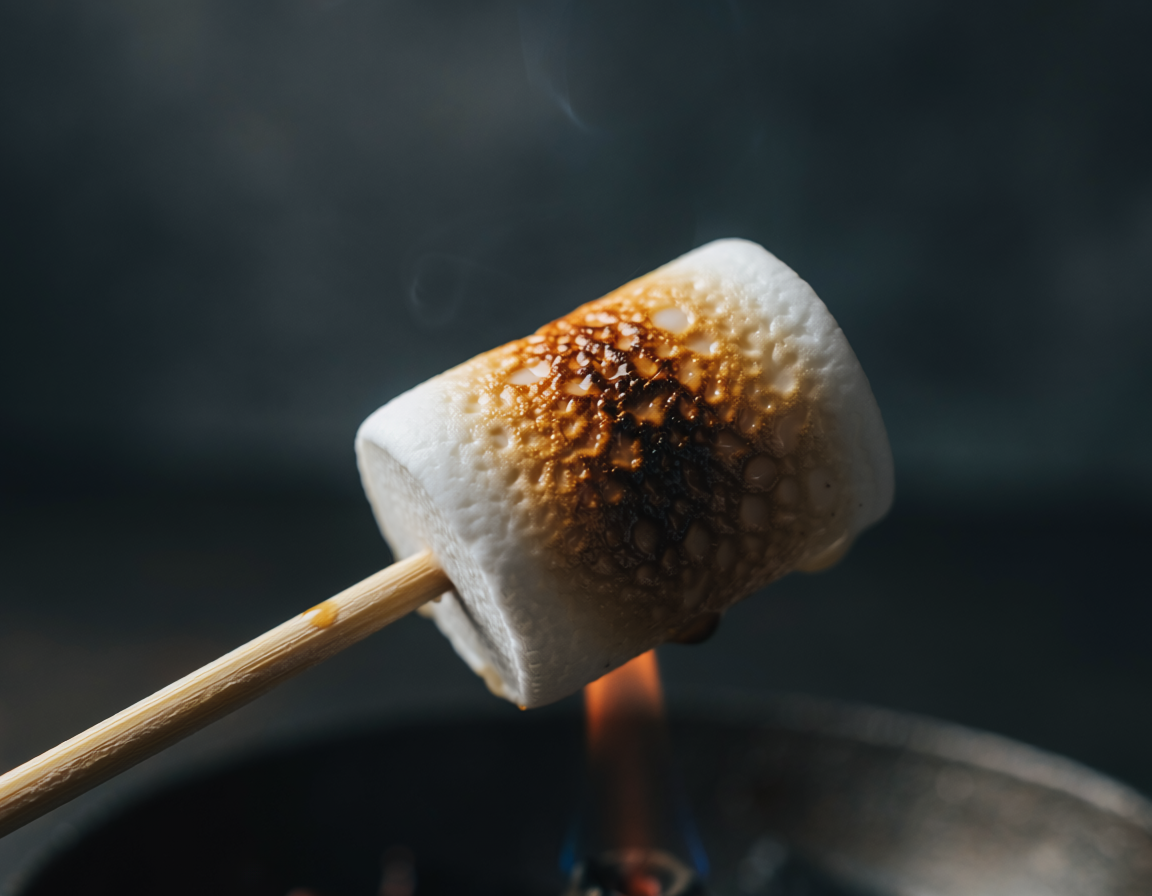
Load up a marshmallow and hold it over a campfire or gas hob for toasty, caramelised perfection. Rustic and delicious.
Not every campfire comes with a supply of green willow to cut. A wooden chopstick is long enough to keep your knuckles out of the heat, thin enough to skewer a marshmallow without tearing it apart, and cheap enough that you genuinely do not mind if it ends up in the embers.
The one real limitation is length. A proper roasting fork is 70cm or more for a reason: it lets you reach the good heat without standing in it. A chopstick gives you about 23cm, which is fine for a fire pit, a chiminea or a barbecue you can get close to, and not enough for a big open bonfire. Know which one you're at before you commit.
How to do it
- Soak the chopstick in cold water for ten minutes. This does not fireproof it, but it buys you a useful few minutes before it starts to char.
- Choose plain, unpainted, unlacquered bamboo. Finishes are not meant to be heated and you are about to eat off this.
- Push a marshmallow onto the pointed end with a slow twist so it doesn't split.
- Hold it near the glowing embers, not in the flames. Flames blacken the outside before the middle has warmed at all.
- Rotate slowly and steadily. The goal is an even golden-brown all round and a molten centre.
- Slide it off onto a biscuit or a square of chocolate, using a second chopstick or the edge of the biscuit to push.
Why it works
Embers give off steady radiant heat, which warms the marshmallow all the way through as the sugar on the outside caramelises. Flames give off convective heat that is far hotter and far less even, which is why a flamed marshmallow is black outside and cold inside. Bamboo is dense enough to char slowly rather than flare, so it survives long enough to do the job.
Tips & warnings
- One marshmallow per chopstick. Two on a thin stick is how marshmallows end up in the fire.
- If you want a genuinely gooey centre, take it further from the heat and give it longer, rather than closer and quicker.
- Bin the chopstick afterwards. Charred wood is not worth reusing and it will taste of the last one.