Craft & DIY
#20 · Mix resin or epoxy
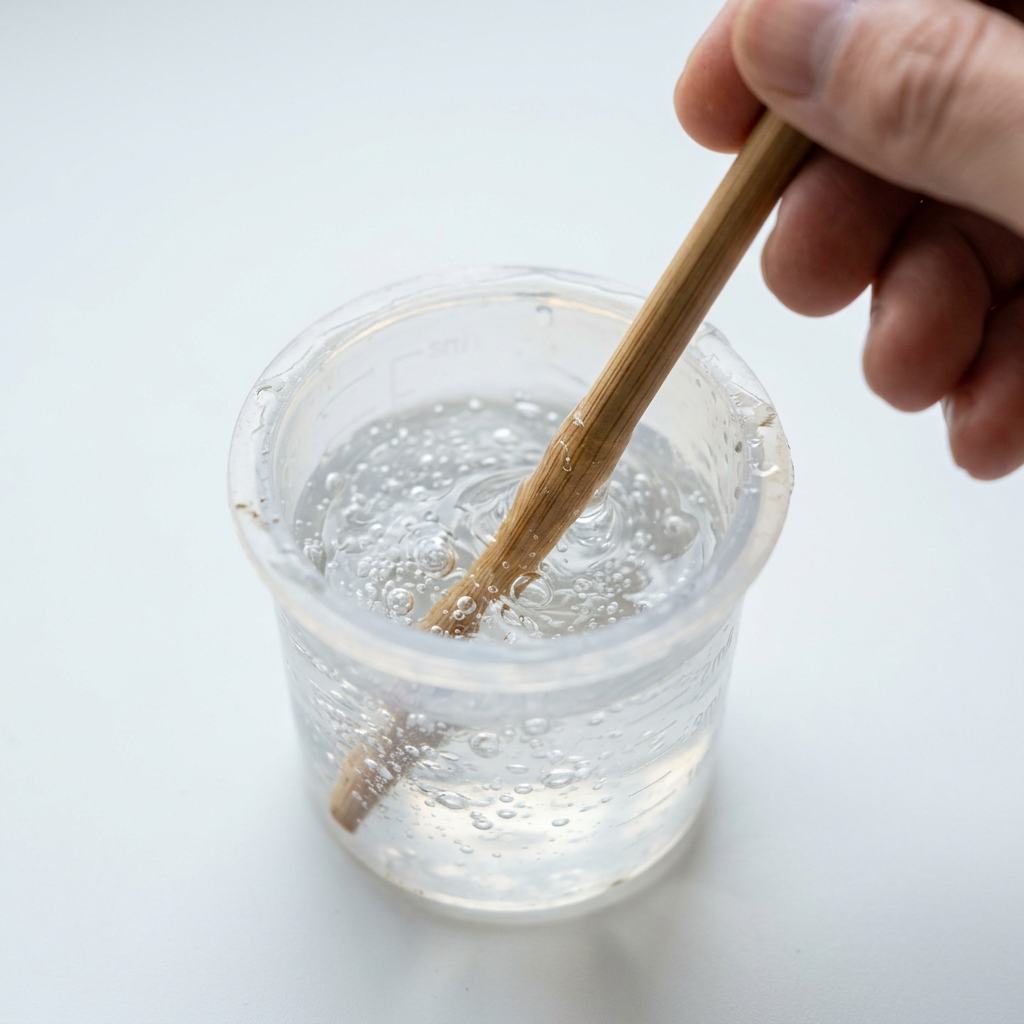
Stir two-part epoxy or casting resin with a disposable chopstick, then throw it away guilt-free. No brush ruined.
Anyone who has tried casting resin knows the failure mode: a piece that looks perfect, and is still tacky three days later. Almost every time, that is a mixing problem rather than a product problem, and a chopstick is the disposable stirring tool the job actually wants.
Epoxy cures by chemical reaction between two components in a fixed ratio. It does not dry. Any resin molecule that never meets a hardener molecule stays liquid forever, which is why 'mostly mixed' is not a thing. The tacky patches on a failed cast are usually a perfect map of where the stirrer never reached.
How to do it
- Measure both parts precisely, by weight if the manufacturer specifies weight and by volume if it specifies volume. These are not interchangeable.
- Stir slowly. Fast stirring whips in air bubbles that you will then spend an hour trying to remove.
- Use a figure-of-eight rather than circles - circles can rotate the whole cup without shearing the two liquids together.
- Scrape the sides and the bottom repeatedly. Unmixed hardener clings to the cup wall, and this is the single biggest cause of sticky castings.
- Stir for the full time on the packet, usually three to five minutes. It always feels like too long. It isn't.
- Decant into a second clean cup and stir again for a minute - the professional trick that eliminates the wall-cling problem entirely.
- Pour, then bin the chopstick.
Why it works
Resin and hardener are viscous, so they don't diffuse into each other on their own - you have to physically fold them together, which is what shearing means. The corner where a cup's wall meets its base is a dead zone that a curved stirrer never properly reaches, and double-potting works because the second cup has no unmixed film on it.
If it isn't working
- Tacky patches on the surface: incomplete mixing, or the ratio was off. Neither is fixable after the fact - sand it back and re-pour.
- The whole piece stays soft: measurement error. Check whether your resin wants weight or volume.
- Cloudy or bubbly: stirred too fast, or the resin was cold. Warm the bottles in a bowl of hot water before mixing.
- It cured in the cup before you poured: too large a batch. Epoxy generates its own heat, and volume accelerates it.
Tips & warnings
- Never reuse a resin chopstick, even one that looks clean.
- Use plain bamboo, not lacquered - flakes of finish in a clear casting are very visible.
- Two chopsticks are useful: one to stir, one to scrape the first one clean into the cup.