Art & Music
#53 · Paper marbling swirl tool
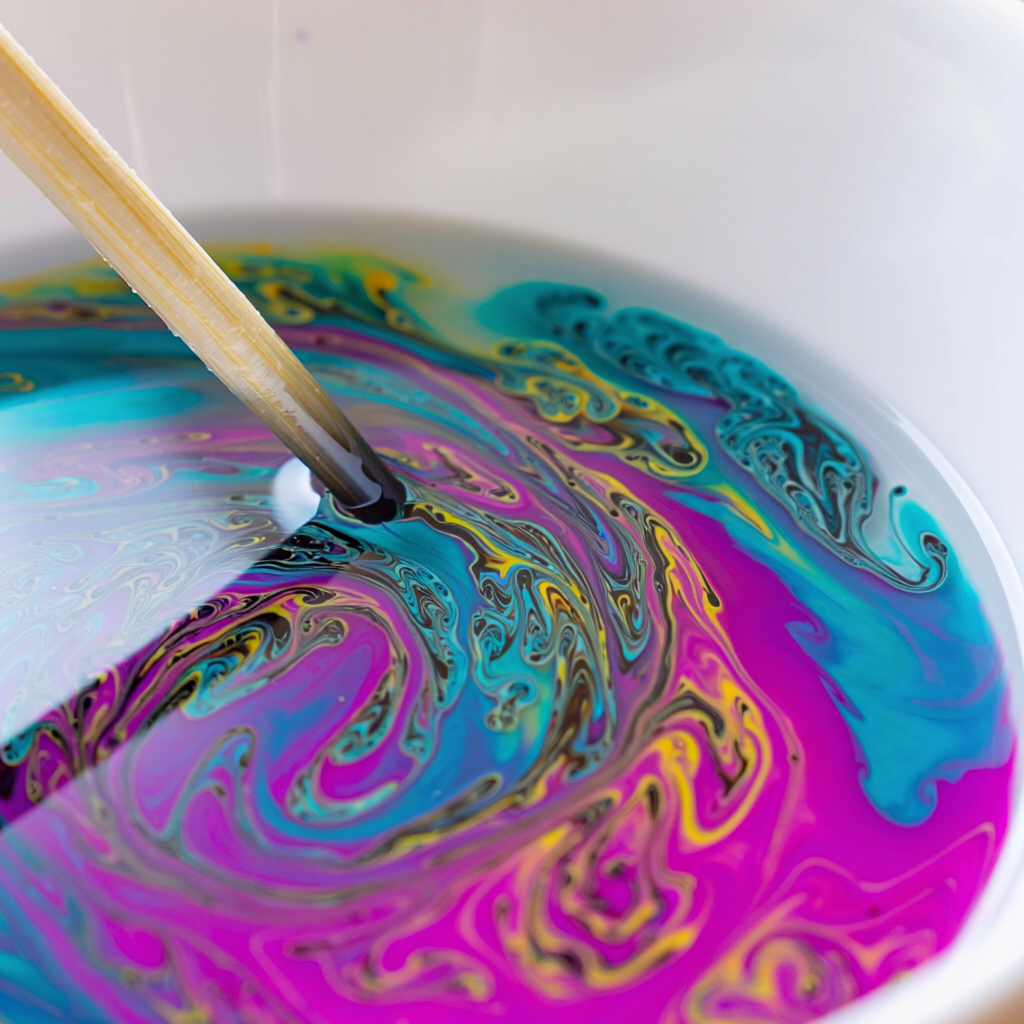
Drag the tip through floating ink on a water surface to create beautiful, swirling marble patterns. Genuinely meditative.
Marbling floats paint on a thickened bath of size and drags it into patterns before lifting the whole thing onto paper. Traditional marblers use combs and fine styluses; a chopstick is a perfectly good beginner's tool for the freehand swirls.
How to do it
- Prepare your size and let it settle - a skin of bubbles will ruin the print.
- Drop your paints onto the surface and let each colour spread before adding the next.
- Drag the chopstick tip through in slow loops. Slow is the whole technique.
- Lay paper onto the surface in one movement, from one edge to the other, so you don't trap air.
- Lift straight off, rinse gently, and dry flat.
- Skim the surface with a strip of newspaper before the next pull.
Why it works
Marbling works because the size is viscous enough that the paint film moves as a coherent sheet rather than dispersing. Anything you drag through it displaces the film and it stays displaced. Move quickly and you tear the film into blurred streaks instead of clean lines - hence slow.
Variations worth trying
- Two chopsticks taped side by side make a two-tooth rake for parallel waves.
- A row of them pushed through a strip of card is a proper marbling comb.
- Dragging in one direction then across at right angles gives the classic nonpareil pattern.