Craft & DIY
#22 · Score fold lines in card
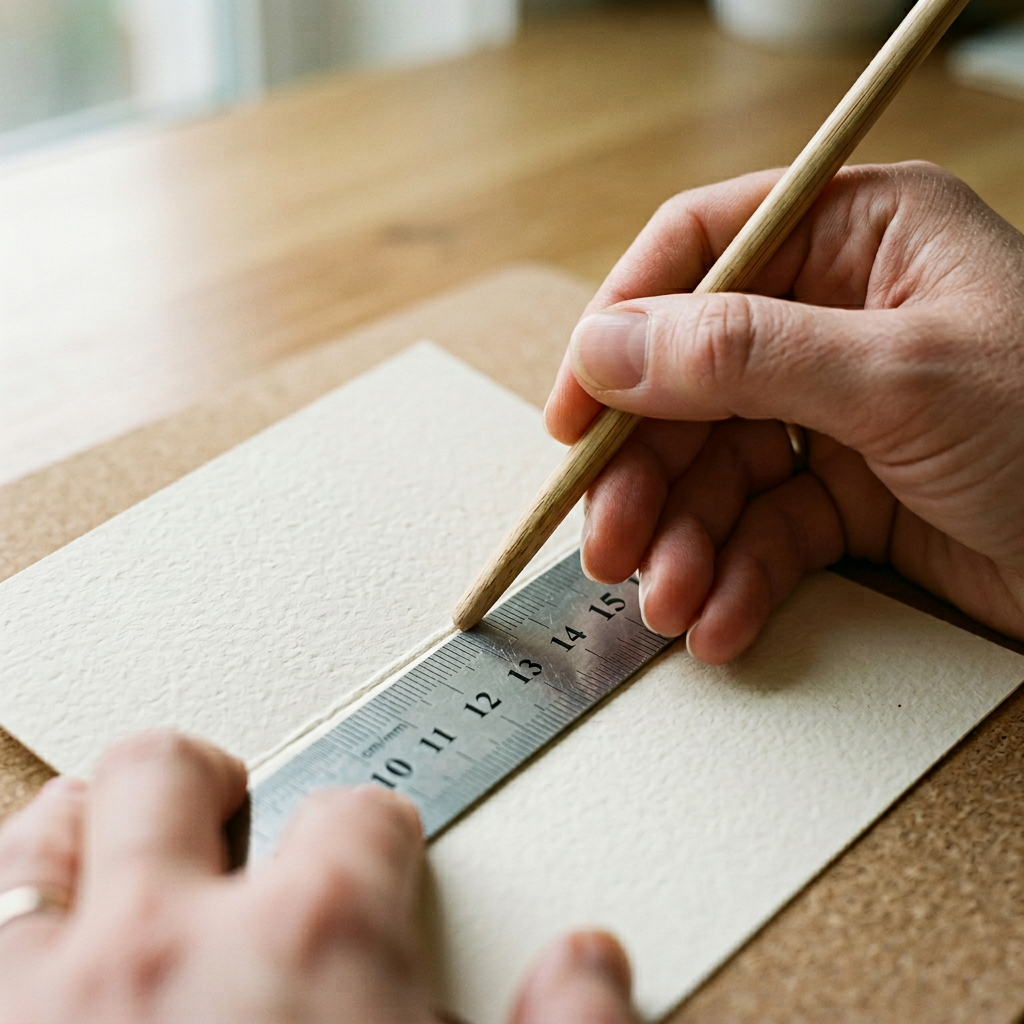
Use the pointed end as a scoring tool to create precise fold lines in thick card or leather for clean, sharp bends.
A crisp fold in thick card is close to impossible without scoring it first. Bookbinders use a bone folder for this - a smoothed blade of actual bone - and the chopstick is a very serviceable stand-in for anyone making cards, boxes or model kits at home.
How to do it
- Work on a hard, flat surface. A cutting mat is ideal; a soft surface absorbs the pressure you need.
- Line a metal ruler up along the intended fold.
- Use the side or the rounded blunt end of the chopstick, never the point - the point tears rather than compresses.
- Press firmly and draw along the ruler in one continuous stroke. One confident pass beats three timid ones.
- Fold away from the scored groove, so the card opens along the crushed side.
Why it works
Card is a mat of compressed fibres. Folding it unscored forces the outer layer to stretch, and because paper fibres don't stretch, they tear - that's the white cracked line you see on a bad fold. Scoring crushes the fibres along a controlled line first, so the fold has somewhere to go and the outer surface bends instead of splitting.
If it isn't working
- The fold still cracks: you scored on the wrong side. The groove goes on the inside of the fold, and you fold away from it.
- The score tore the card: too much pressure, or you used the pointed end.
- The fold wanders off the line: the ruler slipped. Hold it with your fingers spread wide, not bunched.
Tips & warnings
- For very thick board, score both faces and fold between them.
- Grain direction matters more than people expect - card folds far more cleanly along the grain than across it. Test on a scrap.
- Up to about 300gsm a chopstick is genuinely as good as a bone folder. Above that, buy the bone folder.