Kitchen & Food
#13 · Stir the bottom of a jam jar
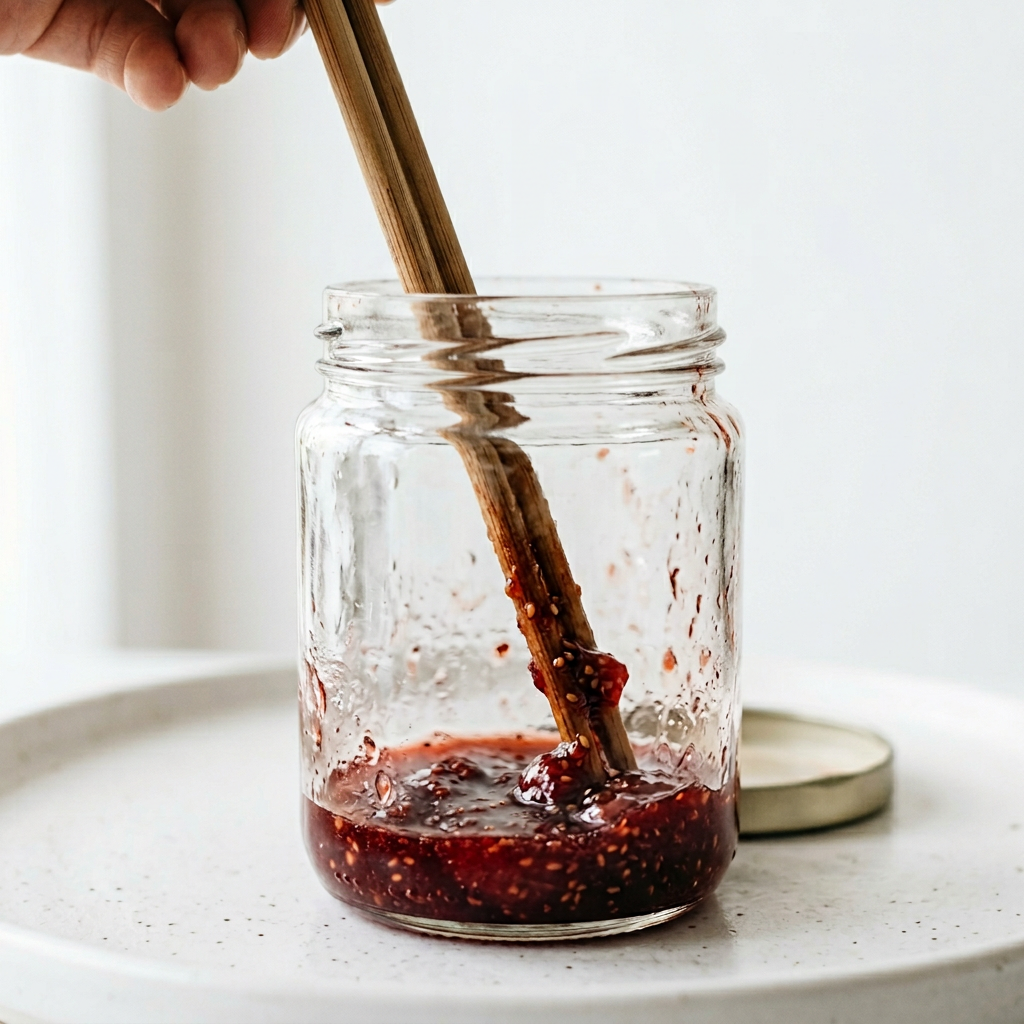
When the jam or nut butter is nearly gone and you can't reach the bottom, a chopstick finishes the job beautifully.
Jam jars, honey jars, tahini, and the peanut butter that has separated into an inch of oil sitting on a brick of solids. Anything narrow-mouthed with something good hiding at the bottom is a job for a chopstick. A spoon scrapes; a chopstick actually stirs.
The specific problem with natural nut butters and tahini is that they separate by design - no emulsifier means the oil rises. A knife or a spoon pushes the solid block around as one lump and flings oil over the rim. A thin rod can get in beside the block and work oil back through it, which is what recombining actually requires.
How to do it
- Pour off nothing. The oil on top is the fat that belongs in the mix.
- Slide a clean chopstick down the side of the jar to the very bottom.
- Stir in slow, wide circles rather than fast small ones, working the oil down through the solids.
- Every few turns, drag the chopstick up the inside wall to lift the dried film that collects there.
- Keep going until the texture is even throughout. On a badly separated jar this takes a genuine two or three minutes.
Why it works
A round jar has a square internal corner where the wall meets the base, and the curve of a spoon simply cannot reach into it. A straight-sided rod can. That corner is exactly where the densest, driest solids collect, which is why jars that seem stirred still have a hard plug at the bottom.
Tips & warnings
- Store natural nut butter upside down between uses. The oil migrates back through on its own and you barely have to stir at all.
- Crystallised honey: stand the jar in a bowl of hot - not boiling - water for ten minutes first, then stir.
- Keep one chopstick by the sink purely for this. It will earn its place.