Kitchen & Food
#10 · Test if oil is hot enough
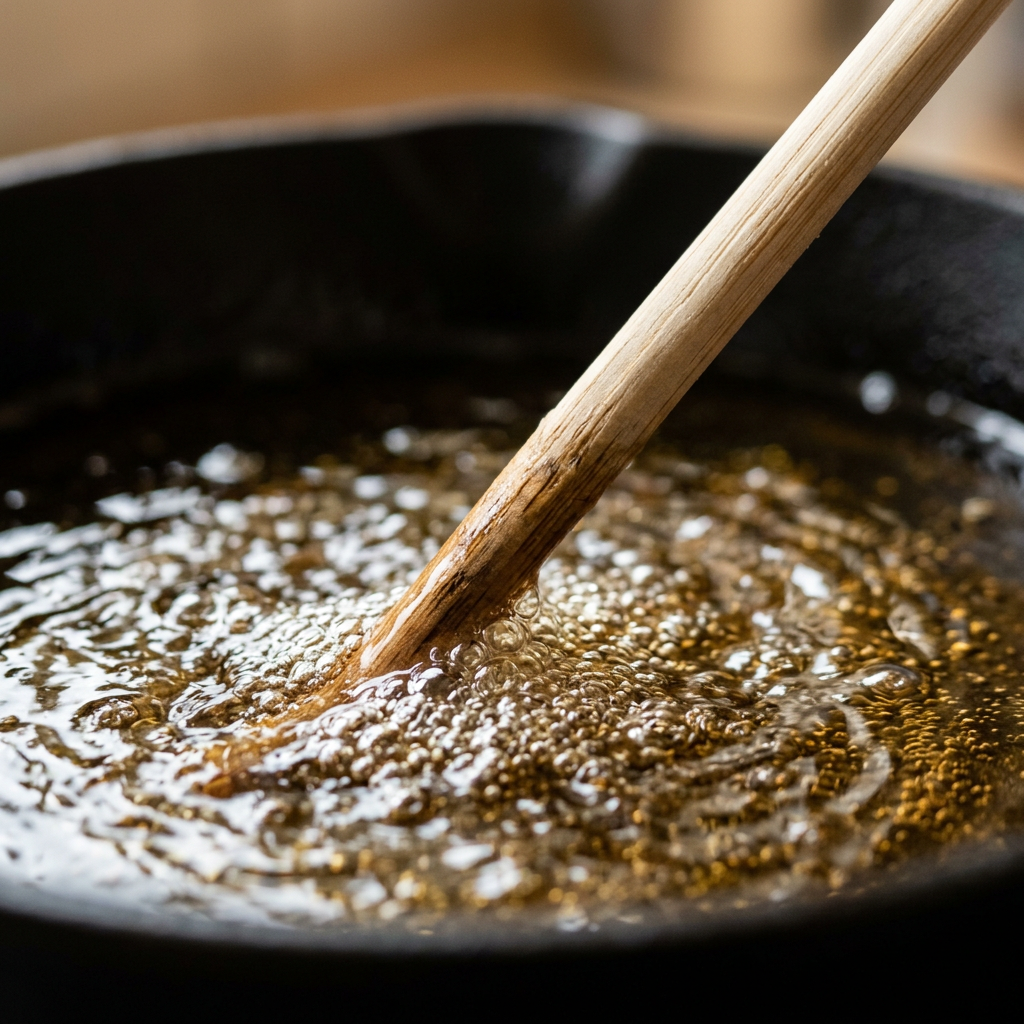
Dip the tip of a wooden chopstick into hot oil - if it bubbles immediately, the oil is ready. Essential frying knowledge.
Deep-frying at home is almost entirely a question of temperature. Too cool and food sits in the oil absorbing it, coming out heavy and greasy. Too hot and the outside burns before the inside cooks. If you don't own a thermometer, a dry wooden chopstick is a genuinely reliable way to read the oil, and it is the method used in Japanese kitchens for judging tempura oil.
This works because bamboo is not completely dry. Even a chopstick that has been in a drawer for a year holds a few percent moisture in its fibres. Drop it into hot oil and that moisture flashes to steam and escapes as bubbles around the wood. How fast those bubbles form tracks the oil temperature closely enough to cook by.
How to do it
- Heat your oil in a heavy, deep pan - never more than a third full.
- Take a plain wooden chopstick and check it is completely dry. Wipe it if you are not sure.
- Dip the tip straight down so it touches the base of the pan, and hold it still.
- Watch the wood right at the oil line and count what happens.
Why it works
The bubbles are steam leaving the bamboo, and steam production is strongly temperature-dependent. Below about 140°C there isn't enough energy to drive it off quickly, so you see nothing. By 180°C the surface moisture boils away almost instantly, giving a fast, fine, continuous stream. The transition between those states is sharp enough to read by eye.
If it isn't working
- Violent spitting the moment the chopstick touches the oil means the chopstick was wet, not that the oil is ready. Take it out, dry it, start again.
- Bubbles only at the very tip: your oil is shallow or stratified. Give it a stir and let it even out.
- Readings that seem to swing wildly: the pan is probably too thin. Heavy-based pans hold temperature far better.
Variations worth trying
- No bubbles at all: below roughly 140°C. Too cool to fry anything - wait.
- A few lazy bubbles drifting up: around 160°C. Right for gentle frying, blanching chips for their first fry, and anything that needs to cook through.
- A steady stream of small bubbles all along the submerged wood: around 180°C. This is tempura, doughnut and second-fry-chips territory.
- Vigorous bubbling with the oil hazing or smelling sharp: too hot. Take the pan off the heat and let it drop before you put food in.
Common questions
How accurate is this really?
Good to roughly plus or minus 15°C in practice, which is enough for almost all home frying. A £10 probe thermometer is more accurate and worth owning if you fry often - but the chopstick has never once been in the dishwasher when you need it.
Can I use the same chopstick to turn the food?
Yes, and long cooking chopsticks - saibashi - exist for exactly that. Just accept that it will darken over time.