Around the House
#41 · Thread elastic through clothing
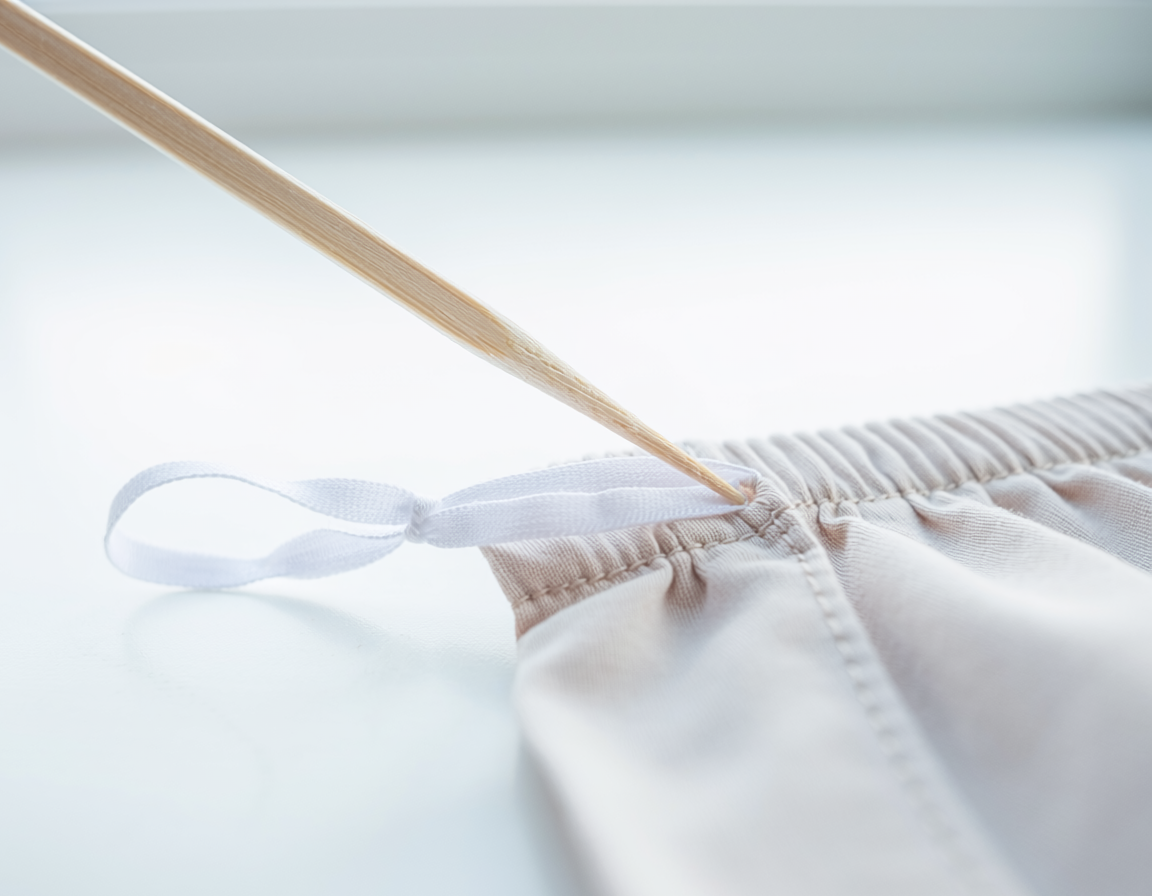
Attach elastic or a drawstring to the end of a chopstick and guide it through a waistband channel. A genuine sewing win.
The elastic in a pair of pyjama bottoms has gone, and the annoying part is not sewing in the new one - it is getting it through the channel. The traditional tool is a safety pin, which you then inch along the waistband a centimetre at a time while it repeatedly turns sideways and jams.
How to do it
- Unpick two or three centimetres of the waistband seam to make an opening, if there isn't one already.
- Cut your new elastic to your waist measurement minus about 5cm, plus 2cm for the overlap.
- Tape one end of the elastic firmly to the tip of a chopstick with a wrap of masking tape.
- Feed the chopstick in and push it along the channel, gathering the fabric back over it as you go rather than trying to drive it forwards.
- When you reach the far side, pull it out and untape the elastic - keeping hold of the other end, which is the classic way to lose the lot back inside.
- Overlap the two ends by 2cm, sew securely with a box stitch, and close up the opening.
Why it works
A safety pin is short, so most of the work is repeatedly bunching and sliding. A chopstick is long enough to cross a good part of a waistband in a single push, and rigid, so the force you apply at your end actually arrives at the far end instead of buckling.
If it isn't working
- The tape comes off inside the channel: use more, and wrap it around rather than just sticking it on top.
- The chopstick won't turn a curve: waistbands with a tight curve at the side seam do defeat it. Fall back to a safety pin for the last stretch.
- The elastic twists inside the channel: pin both ends before you sew, then run the waistband flat between your fingers to straighten it.
Tips & warnings
- Pin the free end of the elastic to the fabric before you start. This single step prevents the most common disaster.
- A bodkin is the purpose-made tool and costs about £3 if you do this often.
- For very narrow channels - drawstring hoods and the like - a safety pin still wins.