Emergency Uses
#79 · Tourniquet windlass
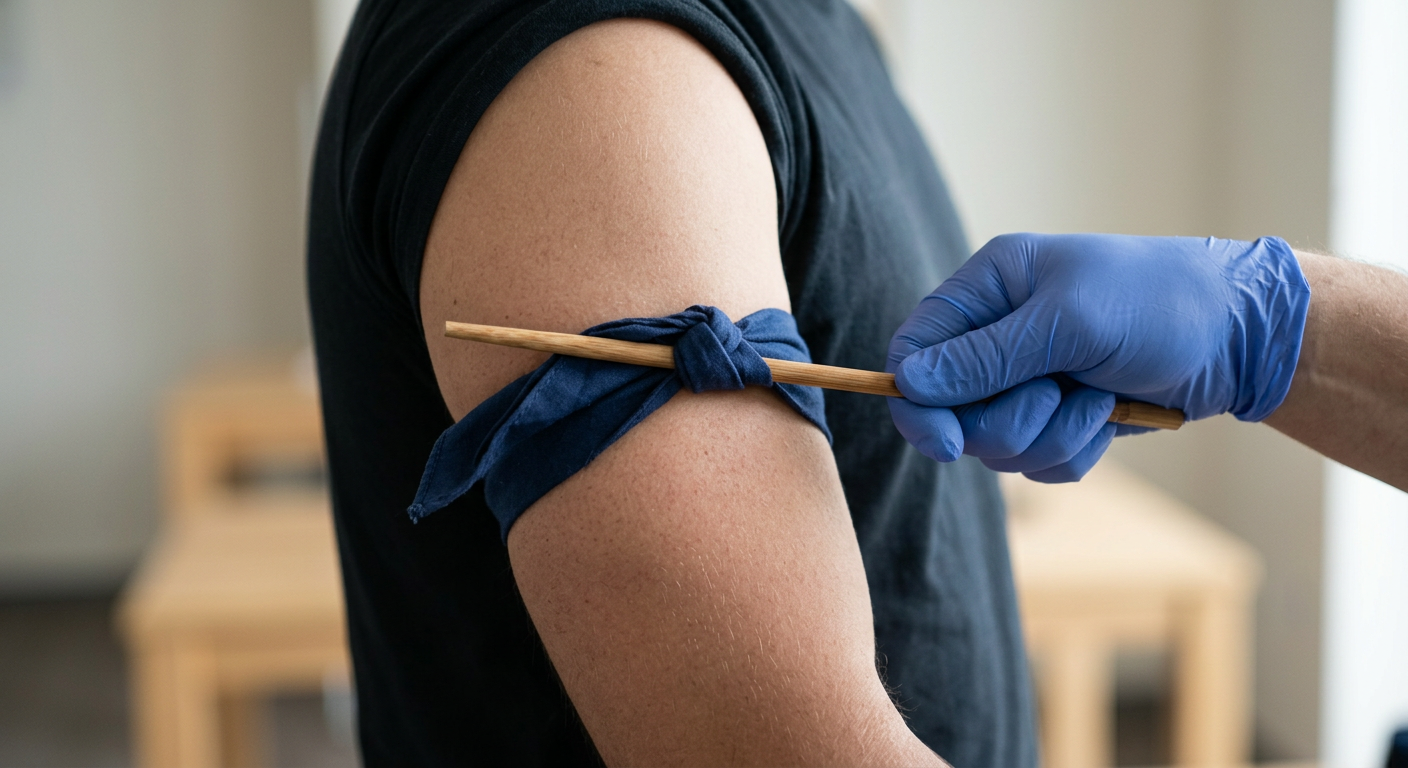
In a genuine medical emergency, a chopstick can be used to tighten a tourniquet by twisting. Hopefully one you'll never need.
A tourniquet stops catastrophic bleeding from a limb, and the part that does the work is the windlass - a rigid rod you twist to wind the strap tight. Improvised tourniquets are a real technique taught on wilderness and military first-aid courses, and the windlass is usually whatever rigid thing is to hand.
A chopstick is the wrong tool for this and we want to be honest about why. Windlasses have to survive a lot of torque, and a single bamboo chopstick is one of the more likely things in your house to snap under it. A commercial tourniquet costs about £15 and is the only thing you should actually rely on. This entry exists because the shape is right and people ask, not because we think you should plan around it.
How to do it
- Call emergency services before anything else, or have someone else call while you work.
- Apply firm direct pressure to the wound first. Most bleeding stops with pressure alone, and a tourniquet is only for bleeding that does not.
- If bleeding is life-threatening and continues, place a wide strip of fabric - at least 4cm, never string or wire - around the limb about 5-7cm above the wound, never over a joint.
- Tie a half knot, lay the rod across it, and tie a full knot over the rod to trap it.
- Twist the rod until the bleeding stops, then secure it so it cannot unwind.
- Write the time of application somewhere visible on the casualty and tell the paramedics. This matters enormously for their treatment decisions.
Why it works
Twisting a rod inside a loop is a windlass: each turn shortens the loop and multiplies your hand strength many times over. That mechanical advantage is the difference between slowing a bleed and actually stopping it, which is why every commercial tourniquet has one.
If it isn't working
- If the chopstick snaps - and it may - use anything more rigid: a screwdriver, a sturdy pen, a tent peg, a metal spoon handle.
- If bleeding continues after tightening, the strap is probably too narrow or too low. A wider strap placed higher works better.
- Never loosen a tourniquet once applied to 'let blood back in'. Leave it for the paramedics.